Showing posts with label poetry. Show all posts

Sunday, January 29, 2017

The Next Page—and the One After


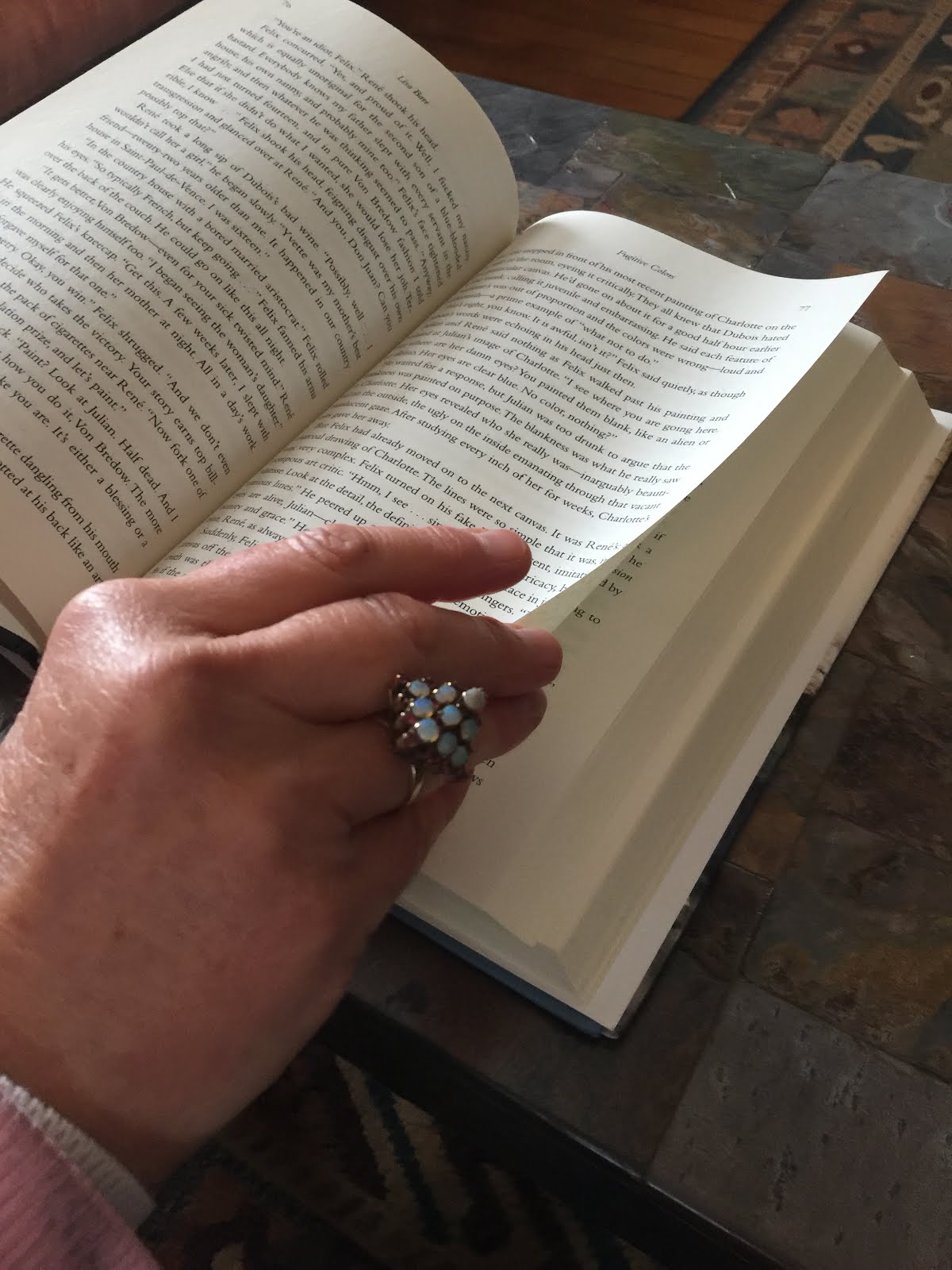
What keeps readers turning pages, and why do you care? The first answer is complicated, the second simple. Without enthusiastic momentum, your reader—whether agent, publisher, or audience—is gone.

Happily, there’s more than one way to keep those fingers moving, because each reader turns pages for slightly different reasons. Here are some possibilities:

~ Suspense

This asset occurs frequently, because many readers and writers associate the novel with impassioned curiosity about what’s next. The supremacy of plot is somewhat genre dependent. Still, whatever your style or subject, don’t skimp on this expectation. Every genre needs some sort of tension on every page.

~ Characterization

Re-examine To Kill  Mockingbird, and its rather antiquated style might dismay you.  Why, then, do so many people list it as their most favorite ever? Few kids rival Scout’s gloriously naive sense of right and wrong. The same might be said of her extremely mature dad. Create characters one can’t forget, and readers will sigh when there are no more pages to turn.

~ Scenario

What do the Da Vinci Code and the Harry Potter series share in common? A wide range of people respond to mystery, underdogs, resourcefulness, and archetypes. Of course it rarely makes sense to replace the scenario that calls to you with a more marketable one. But it makes terrific sense to add heft, originality, danger. Can you make the Concept bigger? More enticing?

~ Emotions

Unless your characters experience them deeply, your readers won’t experience them at all. Yet belabor or “tell” about feelings, and readers still won’t respond. Emotions are concrete, dynamic responses to reality. Present them that way.

~ Secrets

Who doesn’t love them? But if we know too much or little, those whispers can irritate more than intrigue. It never hurts to map out how and when you dispense your novel’s secrets.

~ Humor 

Whether or not your novel is a comic one, exploit every opportunity for laughter, including the bleak irony of tragedy.

~ Poetry

Some novelists write so beautifully that we want more and more and more. At least occasionally, join them.

~ Intellectual curiosity

Those interested in classical music, RNA, or history can’t wait to see what Richard Powers will teach them on the next page of The Gold Bug Variations. What’s your audience curious about?

Whether drama, originality, voice, insight, or point of view, there’s more than one way to keep readers losing sleep and missing calls because they can’t put your book down.

Tip:  Know, internalize, and use your best tricks to keep the pages turning.

Sunday, October 2, 2016

Who Is Wallace Stevens?

When I recently solicited search engine help from a computer geek, that’s the question I got, followed by, “Is Wallace Stevens a corporation?”

Wallace Stevens (1879 - 1955), arguably the greatest poet America has yet produced, may not be recognizable to everyone. After all, not many poets are. But he should matter to every writer, which, of course, includes novelists.

Tip:  Know your audience well enough to present details responsively.

Here’s what Stevens could encourage writers to consider: 

~ Audience. 

This poet’s name, beloved to certain writers and unknown or only vaguely recalled by others, clarifies the question of audience. Until you’ve identified yours, you’ll never know what to take for granted and when you explain too little or too much. Readers (including agents) discard possibilities from both ends of the spectrum: feeling patronized, or feeling that they spend more time with Wikipedia and the dictionary than the novel itself. Neither is much fun.

As a novelist, it’s your job to know whether your readers are likely to be familiar with Wallace Stevens, Grace’s version of “You Don’t Own Me,” or The Battle of the Bulge.  Write for everyone, and you might wind up writing for no one.

~ Mystery and inference.

Stevens urges us to “Throw away the light, the definitions, and say what you see in the dark.” What’s the invitation here? Rationality can sometimes be—too rational, too clear, too blazingly bright to let creativity  flourish. Close your own eyes so you can open your reader’s.

~ Symbolism.

“Reality is a cliché from which we escape by metaphor,” Stevens says in “The Necessary Angel, Essays on Reality and the Imagination.”  Both the poet and the novelist need an original vision, accompanied by figurative language that lets readers see beyond the ordinary.

~ Concreteness

In that same book of essays, though, Stevens insists that it’s the relationship between the individual mind and the sound, smell, taste, sight, and touch of the physical world that lets writers fulfill reader needs: “The imagination loses vitality as it ceases to adhere to what is real.” Because of that, “Conceptions are artificial. Perceptions are essential.”

~ Unity of content and its expression.

Yes, great ideas can be expressed badly, and shallow observations phrased exquisitely. But in the most compelling verbal moments, the quality matches. And the language seems to reinforce the mood, the idea, the emotion. That’s why “A change of style is a change of meaning.”

~ Ambiguity.

Some of the greatest literature is accessible only if the reader is casual about exactitude, so “The poem must resist the intelligence almost successfully.”  Poetry becomes quite difficult if one expects an identical literal meaning from every reader every time. Hmm. Can’t we say the same of certain esoteric but highly influential novelists like Virginia Wool and James Joyce?

~ Inspiration. 

In “Sunday Morning,” Stevens postulates that “Death is the mother of beauty,” Is it the knowledge that life is finite that helps us appreciate the pathos of the seasons, that makes us want to draw? Paint? Write?

That’s who Wallace Stevens is. Want to know more? Start with “The Idea of Order at Key West,” “Evening without Angels,” “Sunday Morning,” and “Adagia.” 

Sunday, April 19, 2015

Poet Tricks for Novelists

Doesn’t orange juice taste good any time of day? Aren’t bouquets welcome without a special occasion? Isn’t poetry’s something every writer should know about? That includes novelists.

Techniques that novelists might borrow from poets:

~ Artlessness.

In “Adam’s Curse” (about life outside Paradise”), Yeats wrote: “A line will take us hours maybe;/Yet if it does not seem a moment’s thought,/Our stitching and unstitching has been naught.”

Work hard enough to make it sound as if you never worked at all.

~ Big Ideas.

Wallace Stevens observes in “Sunday Morning” (about alternate spiritualities) that “Death is the mother of beauty.”

Emotion and suspense drive novels. Using irony and imagery, you can add beliefs, as well.  Layering gives poetry substance. It never hurt a novel, either.

~ Brevity

“My sky is black with small birds heading south,” notes Edna St. Vincent Millay in a sonnet about love—and its aftermath.

So much emotion in so few words. In such simple language. What Emily Dickinson called, “If I feel physically as if the top of my head were taken off…” Couldn’t every writer seek that kind of explosion?

~ Passion.

Dylan Thomas’s villanelle insists, “Do not go gentle into that good night/…Rage, rage against the dying of the light.”

In novels, rhyme generally distracts. But characters frenzied over philosophy, morality, love, and, hate—that’s the stuff that fiction’s made of. Because intensity distracts readers from the mundane, unheroic, patternless amorality of everyday life.

~ Propulsion.

Emily Brontë celebrated the heath she loved with “Lightning-bright flashes the deep gloom defying,/Coming as swiftly and fading as soon.” For novelists, rhythm often involves risk. But take no risks, and you might be good. You’ll just never be great.


Tip: Read some poetry. This could be an investment that pays off.

Sunday, February 16, 2014

Riding the Range

How broad is your novel’s scope?  Many delightful novels never introduce social context. But the novels that haunt us usually capture individuals within their environment.

Consider the narrow scope of these characters interacting during a water aerobics class.

Not wanting a collision, Ella said, “Um, you’re drifting into my lane.”
The woman scowled. “Why does that matter?”
“Well, it matters if you kick me,” Ella answered. Hmm. No “whoops” or better yet, “I’m sorry.” What’s with this person?
“It’s Valentine’s Day. Lighten up.”
 “But you’re not my valentine,” Ella pointed out.
After a long pause, the woman extended her hand. “My name is Ann.  I’m pleased to meet you.”
“Yeah, pleased to meet you, too.”

This conversation offers some intrigue, but without any range, because there’s no context beyond a pool. What happens if you add a detail that establishes a power imbalance? Is one of them a person of color, or a lesbian? Maybe one of these women is an attorney, the other a waitress. Does one of them have a disability?

If the two women differ, how does this affect the response to who says what? What shifts if this aerobics class is in Oregon or Mississippi, in a fancy health club or a Y, on one side of the tracks or the other?

Questions that reveal how society shapes individuals reveal social norms and biases. This invites readers to question their own expectations, assumptions, and biases. Ask readers to consider why someone’s losing, and—everyone wins.

Jhumpa Lahiri’s The Lowland illustrates how background creates characters in the worlds of Calcutta, Rhode Island, and California. Beyond that, her novel explores how the attempted Naxalite revolution continued changing lives long after the Mao posters faded. Even in Lahiri’s capable hands, politics occasionally overrides plot and poetry. But that’s a worthwhile risk. Characters that represent the great forces that stymie or compel us aren’t just more credible. They’re more meaningful and memorable.

Tip: Take risks. Show us not just who your characters are, but what made them that way.


That’s the “real” stuff that novels are made of.