Showing posts with label Louise Brooks. Show all posts

Sunday, March 11, 2018

The Arithmetic of Fiction

Few novelists ponder the addition and subtraction of storytelling. But writers can gain a lot from doing so.

Tip: A novelist’s single best editing tool is a metaphorical scissors.

As Louise Brooks puts it, "Writing is 1 percent inspiration, and 99 percent elimination."

Anton Chekhov agrees: "Brevity is the sister of talent."

Dozens of writers have commented on economy, so this blog could offer endless examples. Since that seems painfully ironic, on to the next topic.

Tip: A novelist’s second best editing tool is adding metaphorical bridges when needed.

Those bridges are called transitions.
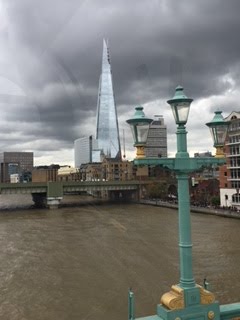
Transitions are words or phrases that carry the reader from one idea to the next. They help a reader see the connection or relationship between ideas and, just as important, transitions also prevent sudden, jarring mental leaps between sentences and paragraphs.  — Leah McClellan, “Why transitions are important in writing”
Novelists want readers to savor the story without the unpleasant reminder that they’re reading one. So not just any transition will do.
transitions move the story forward cleanly and seamlessly. Done skillfully, your reader will hardly notice the breaks. — “All Write Fiction Advice”
Few of us build those bridges instinctively. How to accomplish that? First, identify the connection that never got onto the paper. Second, integrate that transition into the narrative.

Tip: Excess disguises what matters, not only for the reader, but also for the novelist.

In an odd psychological quirk, novelists often assume that the fictional journey needs whatever they wrote. Why else would they record it? This takes a lot for granted. Details might repeat, wander off topic, waste words, or explain the obvious. In a cluttered passage, how would you know? Inefficiency masks significance.

If clutter buries, you won’t notice the leap you require readers to take between one scene or moment or paragraph or sentence and the next. Cut superfluous dialogue or description, and the landscape of your fictional world becomes visible. Now you’re ready to build bridges.


Subtract enough, and it all adds up.

Sunday, April 2, 2017

Letting Your Words Go

When you write from an image or memory that’s truly striking to you personally, the likelihood of generating a rhythmic sentence increases. Rereading such passages you might think, this is—“lovely,” “cool,” “pretty”—whatever you’re inclined to use when your words please you. And, after all, you’d better be pleased with your words at least sometimes, because if you’re doing it for the money, odds are that you should quit. Yesterday.

But. Let’s consider that lovely/cool/pretty sentence in perspective. Is it relevant? Redundant? Is it slightly ridiculous due to self-consciousness, intensity, or exaggeration? Here’s the real question: Does it work for your reader, or only for you?

For many writers, deleting words, especially those that seem most beguiling, can feel so painful that you stare in amazement at your fingertips, wondering why there’s no blood when you slashed yourself.

Recognize any of these reasons why slashing words seems to resemble slashing flesh?
  • Writers write because they love words. Rejecting loved ones hurts.
  • Many writers still recall counting words to complete the paper a teacher demanded.
  • It’s faster to write verbosely than tautly.
  • Like everyone else, writers associate more with greater value. This includes words.
  • Big words remind many writers of the youthful happiness when complex constructions, passive voice, or convoluted metaphors made you “sound”—and feel—smart.
Since these are universal and totally normal responses, what’s the antidote?

~ Remember that, as Marie Kondo puts it in The Life-Changing Magic of Tidying Up, “The release of what’s not so good or not so necessary leaves space for the new.”

Cramming your novel with words no one wants or needs is like stuffing your closet with clothes you’ll never wear. Or your shelves with books you’ll never make time to read. Or possessions that gather dust yet are neither useful nor appealing. Let go of the second rate, so that, “In the end, all that will remain are the things you really treasure” (Marie Kondo).

~Louise Brooks is right. Proceed as if “Writing is 1 percent inspiration, and 99 percent elimination.” 

~ Aim for complexity of thought, not expression.”― Noah Lukeman, The First Five Pages: A Writer's Guide To Staying Out of the Rejection Pile. 

Can you cut or simplify? Then do. Not sure you can cut or simplify? Try harder.

Tip: “Brevity is the soul of wit.” ― William Shakespeare, Hamlet