Showing posts with label self-editing. Show all posts

Sunday, March 11, 2018

The Arithmetic of Fiction

Few novelists ponder the addition and subtraction of storytelling. But writers can gain a lot from doing so.

Tip: A novelist’s single best editing tool is a metaphorical scissors.

As Louise Brooks puts it, "Writing is 1 percent inspiration, and 99 percent elimination."

Anton Chekhov agrees: "Brevity is the sister of talent."

Dozens of writers have commented on economy, so this blog could offer endless examples. Since that seems painfully ironic, on to the next topic.

Tip: A novelist’s second best editing tool is adding metaphorical bridges when needed.

Those bridges are called transitions.
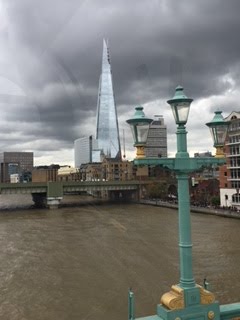
Transitions are words or phrases that carry the reader from one idea to the next. They help a reader see the connection or relationship between ideas and, just as important, transitions also prevent sudden, jarring mental leaps between sentences and paragraphs.  — Leah McClellan, “Why transitions are important in writing”
Novelists want readers to savor the story without the unpleasant reminder that they’re reading one. So not just any transition will do.
transitions move the story forward cleanly and seamlessly. Done skillfully, your reader will hardly notice the breaks. — “All Write Fiction Advice”
Few of us build those bridges instinctively. How to accomplish that? First, identify the connection that never got onto the paper. Second, integrate that transition into the narrative.

Tip: Excess disguises what matters, not only for the reader, but also for the novelist.

In an odd psychological quirk, novelists often assume that the fictional journey needs whatever they wrote. Why else would they record it? This takes a lot for granted. Details might repeat, wander off topic, waste words, or explain the obvious. In a cluttered passage, how would you know? Inefficiency masks significance.

If clutter buries, you won’t notice the leap you require readers to take between one scene or moment or paragraph or sentence and the next. Cut superfluous dialogue or description, and the landscape of your fictional world becomes visible. Now you’re ready to build bridges.


Subtract enough, and it all adds up.

Sunday, December 31, 2017

Resolutions for Writers

Perhaps you plan to make them about what you eat or how much you exercise. Doesn’t your novel deserve the same determination to replace lousy habits with nourishing ones?

But since the writing process differs for every writer, not all resolutions work for every writer. Nor are all resolutions equally successful. Not everything below will necessarily apply, but here are some ideas to get you started.

AVOID:

x Absurd goals.

Unrealistic deadlines often result in ignoring deadlines altogether—and actually writing less.

x Self-judgment.

Never disrespect your work or yourself, and adding humor to self-disparagement can’t entirely defeat the deleterious effect. The publication market has never been tighter, so it’s not fair to assess your talent based on what happens there (or doesn’t).

x Rationalization. 

This manifests in myriad ways; “The passage isn’t that bad,” “A dreadful sentence every so often isn’t a problem,” “So what if they have to reread a couple of lines to know who says what:” or “Tension on every page quickly gets tedious.” If you found it, fix it.

x Envy.

Someone will always be better, whether it’s plotting or prose, characterization or comedy. Comparing yourself to others accomplishes nothing. There’s only one person you’re competing with. That’s you.

EXPLORE:

~ Verbs. 

The best ones electrify by clarifying, inciting, deepening, intensifying and so on

~ Revision.

Instead of fiddling with synonyms, assess the deep structure. As Helen Dunmore notes:
Reread, rewrite, reread, rewrite. If it still doesn't work, throw it away. It's a nice feeling, and you don't want to be cluttered with the corpses of poems and stories which have everything in them except the life they need.

~ Risk.

How will you know what you can do or who wants your book or what a review will say—unless you try? According to Soren Kierkegaard,
To dare is to lose one’s footing momentarily. To not dare is to lose oneself.
~ Strengths. 

And once you set your goals for yourself, whatever those are, you needn’t go it alone. As Anjali Sachdeva says, 
When you join forces with someone else, or even tell others about your goal, you are more likely to follow through.

Best of luck with your goals, your writing, and everything else in this new year!

Saturday, November 4, 2017

Voice: Constraint + Conviction

Writing coaches often urge novelists to “let it flow.” Go ahead and write as fast as you can type, which, for most of us, is faster than we can think. In The Basket Weaver, for example, Jan Marquart suggests: “Sit quietly, listen, listen again, then listen some more and write out everything the voice says with no censoring-–none-–not one word.”

For some novelists, there’s no better strategy. But this approach works only if you’re willing to discard everything—yup, everything—that’s self-indulgent, redundant, or second rate. That necessitates more courage than many writers, including yours truly, possess.

Tip: Voice balances wildness with convention.

You need both individuality and artistry. According to Patricia Lee Gauch,
A writer's voice is not character alone, it is not style alone; it is far more. A writer's voice like the stroke of an artist's brush—is the thumbprint of her whole person—her idea, wit, humor, passions, rhythms. 
If you accept that painters have “voices,” J. W. Turner beautifully illustrates freedom within restraint. He studied, mastered his craft, and produced solid conventional work like this:


But if that’s all he ever did, he’d never have his own gallery in London’s Tate Museum. Historians 
suspect eyesight played a role, but, in any case, here’s why he’s remembered:

a

Without command of the fundamental, how can you paint or write? Like everyone else, novelists can bore, pontificate, melodramatize, repeat, and confuse. If your voice includes any of that, keep it to yourself. Because “Whether crafting fiction or how-to manuals, self-expression is a negotiation” (Noah Berlatsky in “‘Voice’ Isn't the Point of Writing”).

Without command of the fundamental, how can you paint or write? Like everyone else, novelists can bore, pontificate, melodramatize, repeat, and confuse. If your voice includes any of that, keep it to yourself. Because “Whether crafting fiction or how-to manuals, self-expression is a negotiation” (Noah Berlatsky in “‘Voice’ Isn't the Point of Writing”).

This is where writing commandments apply. Your uncensored self belongs only in a journal. And although we cherish the personal writing of  “the greats,” this is usually due to what they crafted for public consumption—through that “negotiation.”

Writing rules not only reduce “telling,” meandering, and abruptly jolting. Consider your readers, and you create a sort of psychological safety net.  Thasia Frank and Dorothy Wall suggest that
Most writers struggle to unearth voice—not only because one’s own voice is simply too familiar, but also because to speak from your voice means confront your world, your dreams, and your entire life raw and unsoftened by explanations.
In the most exquisite sort of irony, you’re less vulnerable when your narrator and characters stand between your naked self and your readers. And without getting psychologically and linguistically naked, how can you find and use your voice?

And here’s why that’s where it’s at. According to David Malouf,
I've long come to the conclusion that when people say they can't put a book down, they don't mean they're interested in what's happening next; they mean they are so mesmerised by the writer's voice and the relationship that has been established that they don't want to break that.

Isn’t that exactly what you want your novel to do?

Sunday, July 30, 2017

The Novelist and Cheap Dental Floss

You know the kind. Bought on impulse at a price too good to be true, it knots and breaks, leaving behind tiny, disgusting, barely removable fragments. Of course you should discard it. But small though the investment is, you’ve made one and feel obliged to see it through. Is that how you treat whatever you’ve already written? If so, is that in your best interest? 

Tip: If it really doesn’t work, let it go.

“An editor,” says Susan Bell, “doesn’t just read, he reads well, and reading well is a creative, powerful act.

What does it mean to “read well?” Mostly likely, that no matter how much you put into this point of view, setting, even scenario, sometimes you must admit that it simply isn’t salvageable. Consider these questions.

~ Is this problematic whatever so ill-conceived that no amount of editing will fully repair it?

This is a tough one. You thought long and hard about this scene. You can visualize it; part of you loves it. But the objective part of you—the portion that cares more about the story than its author—knows that the dialogue is limp, the tension low, the new character an irritant, the stakes low, and the collection of simple or compound sentences lethargic. Listen to the writer rather than the ego. Don’t keep words (or lousy floss) just because it’s an investment.

~ Does this detail or sentence or character add?

Here’s Thomas Wolfe’s confession:

What I had to face, the very bitter lesson that everyone who wants to write has got to learn, was that a thing may in itself be the finest piece of writing one has ever done, and yet have absolutely no place in the manuscript one hopes to publish.

~ Is this moment, however lovely, simply backstory?

Beware lengthy forays into the past, especially flashbacks. Fiction readers follow the suspense of what’s ahead, rather than the yesterday’s news about what led characters to this point.

~ Is this example a rather self-indulgent journey into what you long to teach or describe?

Colette makes this distinction: “Put down everything that comes into your head and then you’re a writer. But an author is one who can judge his own stuff’s worth, without pity, and destroy most of it.”

~ Is whatever passage you’re questioning redundant?

How many images or metaphors capturing the same thing are too many? More than one, even if each differs slightly. Craft what you want the reader to experience, and you needn’t repeat. Here’s Truman Capote: “I’m all for the scissors. I believe more in the scissors than I do in the pencil.”

According to C.J. Cherryh, “It is perfectly okay to write garbage–as long as you edit brilliantly.” But if you can’t bear to relinquish your investment in time and words? Consider not writing them in the first place. Plenty more—and better—words where those came from.