Sunday, June 18, 2017

The Novelist and “Hardwired for Story”

Exactly what does that catchy little phrase actually mean?
Your reader is biologically wired to respond to your protagonist’s inner struggle. When we’re lost in a story, our brains sync with the protagonist’s and her struggle becomes our struggle. This isn’t a metaphor—functional magnetic resonance imaging (fMRI) reveals that when a story engages us, we experience what the protagonist is going through as if it were happening to us—because it is. We feel what she feels because her emotions travel down our neutral pathways. —Lisa Cron, “Story First, Plot Second,” from Author in Progress, Therese Walsh, ed.
That neural pathway connection depends on the characters of a story or novel. Almost magically, readers respond to vital ones as if they were vitally alive, but without any of the danger, disappointment, mayhem or messiness that real-world interactions bring. Cron goes on to add
To hell with those clunky virtual reality visors—humans already come equipped with the most effective VR of all: the ability to neurologically slip into someone else’s life, especially when she’s struggling with an unavoidable problem trying to figure out what the heck to do. The unspoken question we’re wired to bring to every story is: What would it cost, emotionally, to have to go through that? What will I learn about what makes people tick that will help me navigate my own life?
So as the storyteller every novelist is, your initial challenge is to let readers make an emotional connection that sparks something meaningful to the personal lives of your readers. This could be curiosity, betrayal, paranoia, forgiveness, spirituality—any human issue.

You don’t need anything complex to accomplish this connection, observes Orion Jones in “How the Human Brain Became Hardwired to Tell Stories”:
A standard story-telling formula may go something like this: character(s) + predicament(s) + attempted extrication(s). In short, the very stuff of life. Like our language instinct, a story drive—an inborn hunger for story hearing and story making—emerges untutored universally in healthy children. Every culture bathes their children in stories to explain how the world works and to engage and educate their emotions.
All stories, from cave paintings to meta-novels, share those basic elements. In “Storytelling: What Listening to a Story Does to Our Brains,” Leo Widrich reminds that “A story, if broken down into the simplest form, is a connection of cause and effect.” 

Tip: Build plot and characterization keeping the hardwired impact of story in mind. 

Most novelists already know that characters mustn’t seem flat, that many readers dislike too much “telling,” that episodic or coincidental plots rarely convince, and that story resides in plot instead of theme, rather than the other way around.

So it’s less that writers should revise their approach to plot and characterization than remember what underlies those. Spoon-fed readers can’t experience anything vicariously. Stereotypes don’t evoke human behavior, and thematic statements move us far less than the journeys that reveal those. Consider why internal arcs satisfy more than external ones, why you need to “show” the behavior of your multi-dimensional characters. 

The “why” might just be the path to the “how.” Although it may not feel like it when seeking an agent or publisher, every novelist has a built-in audience. You’ll find those readers through characters who are universal and thus empathetic plus a plot that is causal and thus credible.

Sunday, June 11, 2017

Novelist as Character Beats Character as Novelist

Even writers tire of fictional protagonists enduring blocks, deadlines, and the humiliation of the one-shot-wonder syndrome. Writers can become almost as disenchanted with someone else’s pages reflecting a mirror image—whether witty, maudlin, or ironic—as other readers became long ago.

But using your non-novelist self as template, inspiration, or guru for a protagonist? That’s another story, quite possibly one which exquisitely blends truth with embroidery of it, genuine feeling with “recollection of it in tranquility,” as William Wordsworth put it.

Certainly that involves risk. Skimp on the tranquility component, and you might transform anyone who irks you into a melodramatic villain. Perhaps you’ll splash your politics all over your chapters, or compile scenes so syrupy with self-pity that pages stick together in interactions that seem endless.

For the lucky writer, though (and the lucky readers who get their hands on that novel), the synthesis of raw emotion with the objectivity of narration approaches closest to universal feelings and themes. After all, as Joseph Campbell put it, “You are the Hero of your own Story.” What a great foundation for the hero your imagination and craft create. Why not take that concept further? Shanon Grey believes that “Your life is a book; make it a bestseller.”

How might you infuse your fiction with personal emotions and experiences?

~ Articulate your reactions to events, whether trivial or monumental.

Using either a mental or written journal, consider how anger smells, what your stomach muscles do when you’re happy, or your personal metaphor for fear or passion or spirituality. Note these, again, either on paper or in your head, so they’re available when you need them.

~ Assess “ticking clock” anxiety in your daily world.

According to Sidney Sheldon, “Life is like a novel. It’s filled with suspense. You have no idea what is going to happen until you turn the page.” How does it feel to await the doctor calling you back, the results of the job interview, the tally of an election? That’s how your protagonist feels. Of course you can’t just “tell” readers that, or they’ll never turn the page to get the results. Instead? Translate your responses into imagery, body language, or metaphor.

~ Probe. Shamelessly.

“I think one of the appeals of suspense is to safely explore our innermost fears,” Lisa Gardner observes. Readers can’t do that unless the novelist does it first. Do you shout in rage whenever you’re actually hurt? Does sour grapes ever convince you that the unwanted outcome feels okay? What role does rationalization play in your interaction with others? With yourself?

~ Appraise the stakes.

Whatever worries or bothers one can escalate, even when insignificant as a thoughtless thing you said or heard. Concentrate on how hard you can grit your teeth over what to do. Now make your character feel that, so your readers can.

Tip: Be your own “artist’s model.” And it doesn’t cost a penny,

Many writers enjoy research, correctly believing that it can cement geography, history, and forays into sports or art, quilting or banking. But one area of emotions often goes unexplored: what the writer knows about suspense, emotion, and life. Why neglect that opportunity?

Sunday, June 4, 2017

Sense of Pace

Its familiar namesake—sense of place—is easier to imagine, if not manage. At least you know that readers expect setting to support and vitalize character action and reaction. Yes, the details might prove cliched or skimpy. But what if those details overwhelm? That’s when momentum comes in, and it’s as crucial to assess as tough to judge.

Tip: Readers expect pace to seem invisible.

If readers become conscious of pace, that’s trouble, and not of the fun, exciting kind you inflict on your characters. 

Wikipedia defines pace as “the length of the scenes, how fast the action moves, and how quickly the reader is provided with information.” Carol Benedict notes the effect of these variables:
Every story has a rhythm. If it’s a monotonous one, readers may lose interest. Pacing the rhythm can build tension, emphasize important events, stir the reader’s emotions, and move the action forward.

Pace is about illusion. Unlike time in the real world, nothing ever moves too swiftly or tediously. It’s always optimal. And therefore it stays invisible unless it doesn’t work.
Readers who notice any of these problems can become uncomfortably aware of pace:
  • “Telling.”
  • Confusion (rather than ambiguity or subtlety).
  • Lack of variation.
  • Laborious sentences.
  • Lethargic dialogue.
  • Low or repetitious stakes.
  • All the time in the world.
  • Reliance on stereotypical language, plot, or characterization.
  • Excessive description or spelling out.
  • Scenes lacking in momentum that need to be summaries.
Fortunately, many solutions exist. Here are some possibilities:

~Every time an issue seems almost resolved, introduce a new obstacle.

~ Keep high action/drama scenes moving.

~ Avoid unnecessary adjectives and especially adverbs.

~ Contrast short and simple sentences with long, embedded ones.

~ Structure sentences and paragraphs to emphasize climax.

~ Delete the “thinking aloud” that characterized your first draft.

~ Read like a reader.


You won’t nail this last one every time, or even every other time. But the more you practice, the better you’ll get at conveying the illusion that nothing’s ever too speedy or slow.

Sunday, May 28, 2017

The Good and the Ugly

Story loves heroes. Beowulf conquers Grendel (also his mom). Even to solve money problems, Elizabeth Bennet refuses to marry an oaf she doesn’t love. Amy Tan’s protagonists ultimately transcend erroneous judgements about themselves and others.

Is the writer’s task to reveal the entire picture of a character, including hideous fantasies and metaphorical warts, or will that drive writers away? The best answer: Yes. Also no. 

Some fiction tracks  immoral anti-heroes with perfidious secrets. In Ian McEwan’s Solar, Michael Beard is a Nobel prize-winning physicist who has bottomed out, both professionally and romantically. And here’s a snapshot of Nino Ricci’s protagonist in The Origin of Species:
Alex wondered why he was following this man around like his pet. It was better than just going stir crazy out here was what he told himself. But it wasn’t just that. Somehow, the more time he spent with Desmond and the more reasons he amassed to detest him, the more he felt in his thrall. He wasn’t sure what sort of pathology might lie behind this, if he was drawn to him because they were so different or because he thought them the same.
Throughout this novel, the reader (or at least this one) keeps yelling, “No, don’t do it!” Yet, over and over, Alex makes the worst possible choice. Psychologically, perhaps that’s cause for cheer, as in, “I’d never make that mistake.” Emotional engagement comes not from admiring the character, but wanting to help while secretly believing we could do better.

In “How to Make Unlikable Characters Likable,” Jessica Brody offers this advice:
Tip 1: Give your hero one redeeming quality or action (even if it’s small) at the beginning of the story.Tip 2: Give your hero an enemy…a really evil one.Tip 3: Make us “love to hate” them.
Does that always work? The unlikable protagonist functioning as unreliable narrator in Claire Messud’s The Woman Upstairs generated a literary uproar. Here’s the author’s response: “If you’re reading to find friends, you’re in deep trouble. We read to find life, in all its possibilities. The relevant question isn’t ‘Is this a potential friend for me?’ but ‘Is this character alive?’ ”

Though Meg Wolitzer’s The Interestings produced no uproar, she agreed: “One thing I’ve noticed that’s a kind of disturbing trend is fiction about and by women who the reader is meant to feel ‘comfortable’ around—what I call slumber party fiction—as though the characters are stand-ins for your best friends.” So likable has its place, as does discomfiting. 

If the best fiction changes same-old into new, then making sure your protagonist is likable might be the safest but not necessarily best bet. How can you keep readers turning pages?
  • Dark secrets must be insightful and universal—not just ugly.
  • Both character strengths and weaknesses must feel like part of a whole being.  
  • Readers need to feel compassion before they encounter unappealing traits.
  • Justification for questionable choices and behavior promotes empathy.

Tip: If characters seem whole and alive, readers are more apt to tolerate their shortcomings.

Sunday, May 21, 2017

Opening Up


Buds are full of promise. How large will this one get, how fragrant, how multi-faceted, and will the culmination prove worth the wait? If a bud is a rich with potential, how much more so a novel’s first sentence, paragraph, page, chapter. There you entice readers. Or lose them.

Openings hint at what we can expect, help us decide if we should await the outcome. Contrast these: 
Our quick breath encircled our heads in the late-winter air as he pulled me by the hand, through lines of Model Ts and Cadillac Coupes, toward the glow of the Colonial Theatre. My body coursed with elation and guilt, every bit as intoxicating as the rum drinks he'd mixed for us out of the trunk of his car. The frenzy of the Jazz Age had overflowed from the cities into smaller towns like ours in music, film, fashion, and literature, resulting in restlessness and tension between generations and ideals. Fueled by the energy of the new, we had toasted our agreement: That night it was only us in the world, and we would live like it was ours.     He'd lifted a triple-stranded pearl necklace over my head and set it on my skin, kissing the scar on my collarbone, a relic from the first night we'd found each other. He whispered that the necklace was only costume jewelry, but one day he'd buy me the real thing. --Erika Robuck, Fallen Beauty
Here’s a very different beginning:
The girl standing in the foyer when Alex went down to get his mail, trembling slightly on her cane, was Esther. Not a girl, really: a woman. Everyone in the building knew her. Or everyone, it seemed, except Alex, who, in the few months since he’d moved here, had never quite managed to be the one to open a door for her, or put her key in her mailbox, or start a conversation with her in the oppressive intimacy of the building’s elevators.     She was looking out through the plate glass of the entrance doors to the street, where sunlight now glinted off the morning’s earlier sprinkling of rain.     “I wouldn’t go out there if you don’t have to,” Alex said, then regretted at once his admonitory tone.     From the confusion that came over her, plain as if a shadow had crossed her, it was clear she hadn’t understood.     “The rain,” he said. —Nino Ricci, The Origin of Species
Individual readers will prefer one approach over the over. And why?
  • Contrast the depth. Which probes psychology in a way that intrigues you?
  • Evaluate the scenario. What grabs you, and why?
  • Consider the language. Which seems more vital? Original?
  • Check the syntax. Which types and variety of sentences meet your needs?
  • Respond to the imagery. Does it stimulate your senses?
  • Meet the characters. Do you want to follow them—or flee?
  • Note the point of view. Is it the kind of window into a world you’re looking for?
  • Reader participation. How free must you be to reach your own conclusions?
The average novel reader won’t consciously pose even one of these questions. Still, readers instinctively consider quite a lot of this when checking the opening to decide if this book’s for them. What does the first page offer? Does its potential unfurling seem like something worth following? Whatever the source, is there a genuine hook?

Tip: Your novel’s opening matters more than anything that follows.

Sunday, May 14, 2017

Chocolate and the Novelist

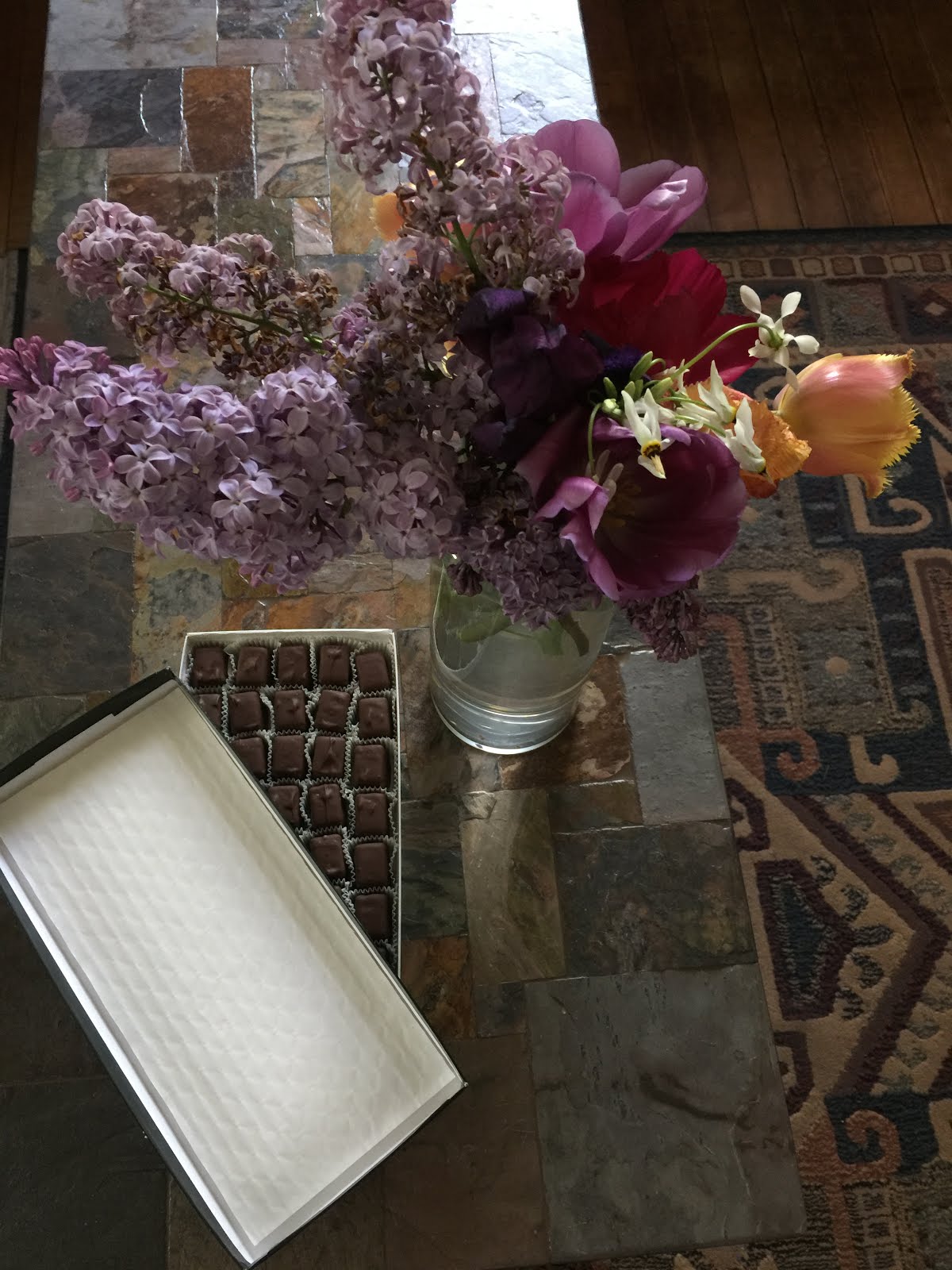
Picture, then inhale the scent, of your favorite flavor. Better even than lilacs, right? Chocolate offers poetry for the tastebuds, antidote for sadness, compensation for anxiety or stress. It’s also a reminder to everyone, including novelists, that enough is enough. 


Take details. Consider the many, many paragraphs of your novel that aren’t drama, action, or dialogue.  These fall into two general categories. 

Some narrative is immediately and directly integrated with the plot, thus creating or sustaining tension. Examples? Backstory, foreshadowing, some kinds of setting, or revelations of resources characters possess or lack. Description intrinsically linked to plot often zips along.

But a lot of the detail in novels has nothing to do with plot. Imagery and information often defeat tension. Still, novels would be mighty thin without description, symbolism, character nuance, and topics from art through zebras. 

Narrative, plot-oriented or otherwise, always affects pace, though the first  category far less than the second. That’s where chocolate comes in. First it fills your mouth with something besides your fingernails while you decide how much you need for clarity, reader satisfaction, and agent attraction. Chocolate soothes during the painful acceptance that you’re not a mindreader. Also, it warns that even something glorious can overwhelm, even nauseate, if over-indulged.  

You might consider all those add-ons that make fiction worth reading—and writing—as the sweet tang of chocolate: fantastic in moderation, but unappealing in smothering doses.

Tip: Too much, even of something quite wonderful, remains—too much.

Subtlety is key. According to Jerome Stern:
Serious writers, including comic writers, are interested in subtlety, in avoiding heavy-handed effects and obvious characterizations. They want to make readers pay close attention, and readers enjoy picking up on clues as subtle as a hesitation or a dropped glance.
Readers expect novels to order chaos, but not to remove every doubt. Readers want lots of chocolate, but not as the main course. These questions might help.
  • Do you leave space for reader imagination?
  • Do you overstate rather than imply?
  • Unsure whether readers “get it,” do you repeat once more, just to be sure?
  • Do you explain your metaphors?
  • Do your adverbs (“lazily,” crazily,” “dazedly”) “tell” what the dialogue already “shows”?
  • Do you ever overwhelm your plot with description or fact?
  • Do you write as if you have faith in reader ability to infer?
Thomas Mann observed that
Subtlety is the mark of confidence… A writer who is confident need not prove anything, need not try to grab attention with spates of stylism or hyperbole or melodrama… He will often leave things unsaid, may even employ a bit of confusion, and often allow you to come to your own conclusions.
In other words, enough chocolate to satisfy (which could be a lot!), but not to overwhelm.

Sunday, May 7, 2017

The Silent Spaces of the Scene

Life is chaotic, fiction is focused. Reality tends toward amoral inconsistency. Fiction, though, from its inception, has conveyed meaning and significance through causal, focused character arc. Unlikely as it perhaps seems, the silent pauses of the story—the moments when readers supply what writers imply—help shape the moral world that expresses theme.

In Dialogue: The Art of Verbal Action for the Page, Stage, and Screen, storytelling guru Robert McKee, observes that  “Silence is the ultimate economy of language.” 

Is this goal worthy? The English Definition Dictionary defines economy of language as “sparing, restrained, or efficient use, esp. to achieve the maximum effect for the minimum effort.” Isn’t that what every reader, and thus every writer craves?

Admirably, McKee, who is all about practicality, urges, 
To master the technique of saying little but expressing much, first train your eye to see into the depths of the unsaid and the unsayable inside the people around you, then train your ear to hear the said.
So the novelist begins, as all the best novelists do, with observation, but of a very particular kind: watch first, listen after. Because it’s not just politicians who rarely say what they mean. What are you watching for?

~ Body language.

What is the speaker doing? And are the movements and gestures consistent with the words?

~ Facial expressions.

Are they forthright or disingenuous? What might one slightly raised eyebrow mean?

~Pause.

This is the magical space where readers rule. What might they imagine when neither the characters nor the narrator says a thing?

Once you’ve done some psychological training with your eyes, train your ears.

~ Tone.

Is the character hostile, sarcastic, subservient, or what? How might you communicate the speaker’s mood without casually, lazily, carelessly resorting to adverbs? Most of them “tell.”

~ Subtext.

Few of us say everything we mean. If we did, more people would get fired and divorced. Instead, we hint with questions like “Is that what you’re wearing?” Insinuation is at least as crucial in fiction as life.

Most fiction balances action with introspection. What integrates them? Silence. The not-so-empty pause between one movement of a sonata to the next engages the listener. Readers, too, require a brief delay to absorb what’s lyrical, appalling, non-negotiable, or inevitable. Silence can accentuate the midpoint of a novel, the climax of a scene, the motivational potential of a pressure point. Let your readers slow down so they compare, contrast, think, and appreciate. 

Tip: Respect the need for moments of silence in your novel.